
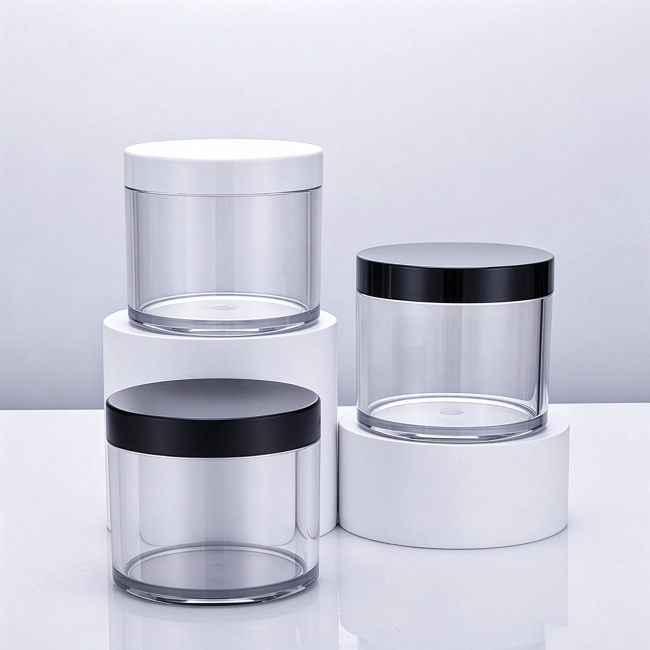
The material of a cream jar decides three things at once: how the product feels in the hand, how much it costs to ship, and which market restrictions apply. Below is a straight comparison to help you shortlist before you request samples.
At a glance
- Acrylic (PMMA) — crystal clear, high gloss, premium look; scratch-prone, not for hot-fill
- Glass — heavy, cold to touch, best perceived value; highest freight cost, breakage risk
- PET / PP — light, impact-resistant, low cost; less luxurious, can look thin
Cost and freight
Glass carries roughly twice the weight of an equivalent PET jar, so the landed cost per unit rises quickly once you count sea freight. If your product sells at a premium price, the shelf appearance of acrylic or glass pays for itself. If you compete on price in a crowded category, PET or PP usually wins.
When to choose what
- Premium serum, luxury cream, gift sets → glass or acrylic
- Mass market skincare, e-commerce → PET
- Travel size, sample sachets, 5g–15g → PET or PP
- Oil-based formulas → glass (better barrier)
MOQ and lead time
Stock molds in acrylic and PET ship faster than a custom glass jar, which requires a new mold and a longer cycle. Tell us your target hand-feel and budget range — we will propose the material that hits both.